
"same species"
7000 article(s) found

Coffee beans are not beans?! Are you kidding me?
Coffee beans / red beans / soybeans / black beans are all called beans, but do you make them? Coffee beans are not beans. So, what exactly are coffee beans? To tell you that lattes and cappuccinos are not a kind of coffee, they are a kind of drink, and the taste of this drink is made up of espresso plus milk and milk foam. And the flavor of espresso is
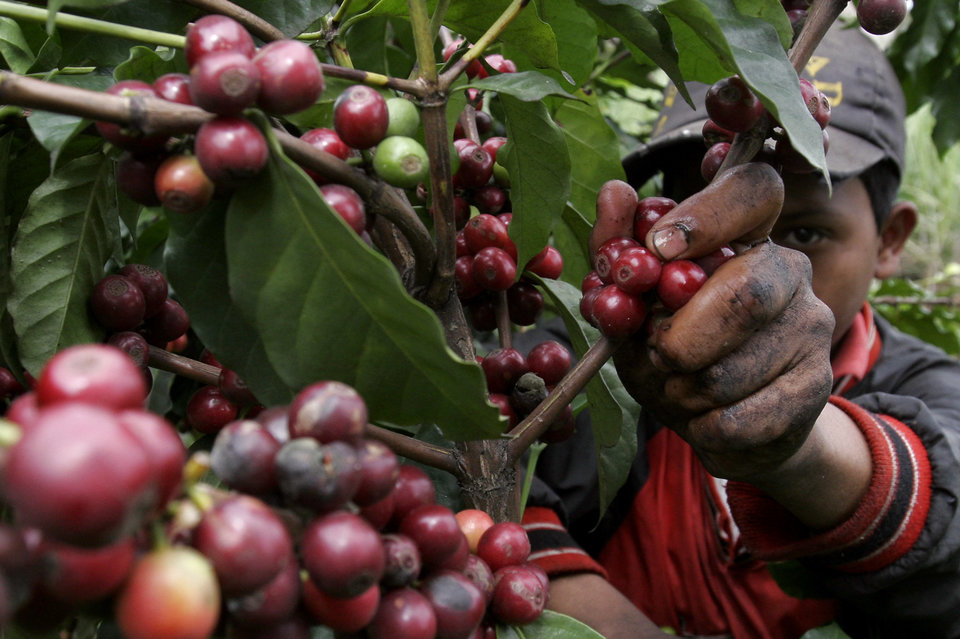
Washed raw coffee beans of grade G1 snow coffee native species Waka Worka in Ethiopia Yega Xuefei
Yejaschuffe itself is a small town of about 20, 000 people, and the three neighboring producing areas, Wenago, Kochere and Gelena Abaya, are also classified as Yejasuffe because they produce coffee with almost the same flavor as Yejasuffe. Yejasuffe is similar to neighboring Sidamo in terms of culture and geography, but it seems to be more concerned about it.

Introduction to the types of coffee: blue Mountain, Java, Manteau, Mocha, Brazilian Coffee varieties and characteristics
Professional coffee knowledge exchange more information about coffee beans Please follow the coffee workshop (Wechat official account cafe_style) there are four kinds of coffee trees in the world that are really commercially valuable and have been widely planted. One is the Elaraby species (ARABICA), and the other is the Robasta species (KOBUSTA). Different varieties of coffee beans have different tastes, but even the same
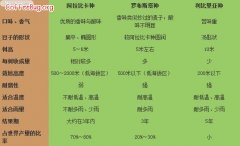
The basics of coffee beans
Coffee belongs to the evergreen shrub of the genus Rubiaceae, which is centered in the tropics. There are about 6000 species of Rubiaceae belonging to 500 genera. Coffee has always been thought to have certain effects, such as strengthening the stomach, waking up the brain, stopping bleeding, dissipating heat, strengthening the body, and so on. The more famous Rubiaceae plant is Gardenia jasminoides, whose fruit was dried and used as medicinal material a long time ago.
Initial processing requirements of Yunnan Coffee (Arabica species)
Technical requirements for the initial processing of small seed (Arabica seed) Coffee 1. There are two processing methods for coffee beans made from fresh coffee fruits, namely wet processing and dry processing. The first and second grade fruits are processed by wet method, and the third grade fruits are processed by dry method in areas without peeling machine and lack of water. 2. Processing technology 2.1 equipment and facilities should be equipped with fresh fruit collection pool and siphon
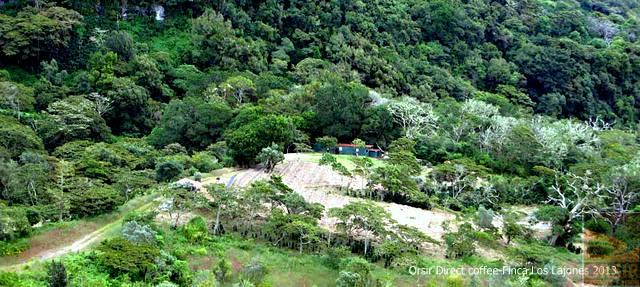
Coffee Bean selection course Coffee Bean Brand species Guide Solar treatment Class its Maggie Bench Majie
With the deepening of people's contact with coffee, ordinary taste can no longer meet people's needs. As a result, more and more coffee lovers will buy their own beans and go home from the beginning of grinding, blending their favorite coffee flavor step by step. The size of coffee beans

What is indigenous coffee in Ethiopia? What is Ethiopian coffee?
Professional coffee knowledge exchange More coffee bean information Please pay attention to the coffee workshop (Weixin Official Accounts cafe_style) coffee diffusion, shuttle between the northern and southern hemispheres But its footprint in its birthplace is also quite delicate. Ethiopia is located in East Africa. Its territory is divided from southwest to north by the Great Rift Valley of Africa: the mountains in the west are believed to be the source of coffee; the mountains in the east are believed to be the source of coffee;

Which three types of coffee beans include Arabica coffee beans with rich aroma and high acid quality
Professional coffee knowledge exchange more coffee bean information please follow the coffee workshop (Wechat official account cafe_style) front street-coffee bean variety introduction Arabica species account for about 70% of the world's coffee production, the vast majority of coffee beans that we become raw beans in daily life are Arabica varieties. Because Arabica coffee has a charming aroma and rich flavor

Leaves and flowers of coffee
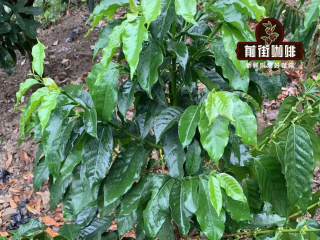
Coffee leaves opposite, usually two rows spreading, individual single leaf whorl, petiole short, leaf leathery, green (dark green on the upper surface, light green on the lower surface). Glossy oval, oval to long oval. The leaf size of small-grain coffee is relatively uniform, the leaf is small and the end is longer, and the leaf edge wave is obvious, about 12-16 cm long and 5-7 cm wide. The leaves of the medium grain species are long and large, soft and thin.

The reason for the charming flavor of Yega Xuefei: unique coffee planting pattern and Ethiopian native species
Communication of professional baristas Please pay attention to coffee workshop (Wechat official account cafe_style) Esse coffee cultivation is divided according to scale and model: ● forest coffee forest coffee (8-10%), coffee trees and other crops coexist in the primeval forest, without any manual care, farmers will pick coffee fruits regularly. ● Forest-half Forest Coffee semi-forest coff

What are the differences between Arabica and Robusta?
Coffee is an evergreen shrub native to Ethiopia in East Africa. The main tree species can be divided into three original species: Arabica, Robusta and Liberia. At present, the most important coffee beans in the world trade mainly come from two original species: Arabica and Robusta. This coffee bean cultivation method, growth environment, shape and other conditions and characteristics have

Sulawesi boutique coffee beans
Boutique coffee beans must be excellent varieties, such as the original bourbon species, mocha species and Tippica species. The coffee beans produced by these trees have unique aroma and flavor, which is far from that of other tree species, but the relative yield is low. in recent years, in order to pursue the ability of disease and insect resistance and increase the yield, there have been many improved tree species, such as the massive promotion of high-yield rurial11 species in Kenya.
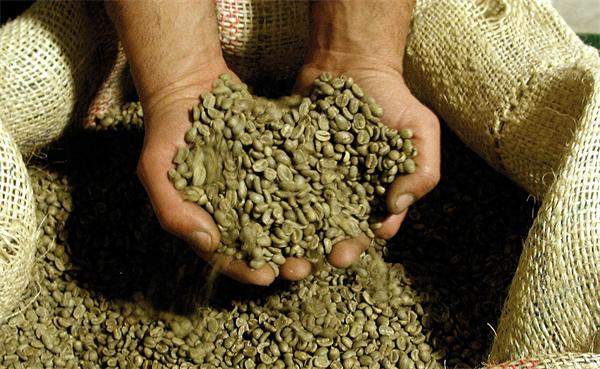
Species of coffee trees Arabica species Robasta species Liberian species Esselsa species
There are more than 6000 species of coffee trees, most of which are tropical trees and shrubs. There are four main coffee trees in the world, of which only two are of real commercial value and are planted in large quantities, and the quality of the coffee beans produced by other coffee trees is also higher than that of other coffee trees. The first is Arabica beans, which account for 70% of the world's output, the world-famous Blue Mountain.
Technical requirements for primary processing of coffee in Yunnan (Arabica species)
Technical requirements for the initial processing of small seed (Arabica seed) Coffee 1. There are two processing methods for coffee beans made from fresh coffee fruits, namely wet processing and dry processing. The first and second grade fruits are processed by wet method, and the third grade fruits are processed by dry method in areas without peeling machine and lack of water. 2. Processing technology 2.1 equipment and facilities should be equipped with fresh fruit collection pool and siphon
The primary processing technology of coffee in Yunnan requires Arabica species
Technical requirements for the initial processing of small seed (Arabica seed) Coffee 1. There are two processing methods for coffee beans made from fresh coffee fruits, namely wet processing and dry processing. The first and second grade fruits are processed by wet method, and the third grade fruits are processed by dry method in areas without peeling machine and lack of water. 2. Processing technology 2.1 equipment and facilities should be equipped with fresh fruit collection pool and siphon
Why is Kenyan coffee good? Is the good flavor of Kenyan coffee decided by Arabica species?
Kenyan caffeine is very good for its flavor characteristics. The strong acidity of Kenyan beans creates a cup of espresso with berry flavor. Because of its complex flavor characteristics, you can enjoy both hot and cold Kenyan coffee. Whether it's making cold coffee or using a French kettle, Kenyan coffee will provide the same result.
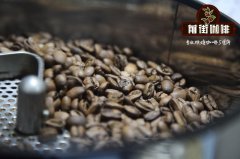
Yunnan coffee price list and pictures _ how about Yunnan coffee beans _ how much is a cup of Yunnan coffee
Professional coffee knowledge exchange more coffee bean information please follow the coffee workshop (Wechat official account cafe_style) Yunnan coffee bean small seed coffee [scientific name] small seed species is Coffea arabica L., medium grain species is Coffea canephora, large seed species is Coffea liberica family: Rubiaceae coffee genus [alias] small seed species also known as Arabian species, medium grain species also known as Gan

Coffee beans picking year Brand recommended species Flavor description taste producing area
Flavor description of Brand recommended species in the year of Coffee Bean picking Coffee trees can be divided into two main varieties: Arabica and Robusta. There are also some minor species, such as the Liberian species (Liberica) and the Alabasta species (Arabusta), but they are rare on the market. Although Arabica and Roberta are widely planted,

Ethiopian native species, the coffee cultivation of [Sidamo] mostly belongs to the pastoral coffee model.
Professional coffee knowledge exchange more coffee bean information Please pay attention to coffee workshop (Wechat official account cafe_style) [Sidamo] coffee cultivation mostly belongs to the pastoral coffee model, that is, coffee farmers plant their own coffee trees near their living areas, harvest them during the harvest season, and then send them to a nearby treatment plant built on water for unified treatment (or by an intermediary.
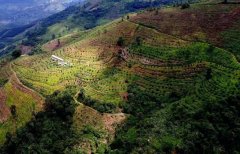
What is the boutique coffee in China, the development history of Yunnan coffee, is Yunnan coffee beans delicious?
Yunnan, as the main coffee producing area in China, what special flavor does it have? In recent years, Yunnan coffee beans stand out in the raw bean competition and become a group of dark horses to enter the boutique coffee market, so what is the unique charm of Yunnan coffee? What kind of story does it have? The first Yunnan coffee beans were introduced by Tian Deneng, a French Catholic missionary, via Vietnam in 1904.